Where Nacpan Beach is and what it is like
Nacpan lies on the open coast north of town: about 16 km (10 miles) up the paved national highway, then roughly 4 km down an access road that used to be rough and is now mostly sealed. The beach runs for around 3 km (2 miles), backed by coconut palms and low hills, with fine golden sand rather than the white powder of the island beaches.
At its southern end a small headland separates Nacpan from Calitang, a shorter beach curving the other way. Seen together from the hill above, the two form the "twin beach" view in so many photos of El Nido. Development has arrived, with guesthouses, small hotels and glamping tents, but the mood is still far quieter than in town, and walking north along the sand quickly leaves the crowds behind.
Getting to Nacpan Beach
By tricycle, the ride takes about 45 minutes. Most visitors hire one for a round trip with waiting time; a 2023 Rappler guide put this at around ₱1,500-2,000 (about $24-32) per tricycle, so agree the price, the waiting time and the return hour before you leave. Shuttle vans run from town on a schedule several times a day for a fixed fare per person, with the last trip back in the early evening; your guesthouse can tell you the current times.
By scooter, rentals in town have cost roughly ₱500-700 (about $8-11) a day plus fuel. The road is easy, but the last stretch can still be muddy after heavy rain in the wet season; wear a helmet. Inland day tours sold in town combine Nacpan with Nagkalit-kalit Falls, whose trail starts off the highway on the way north.
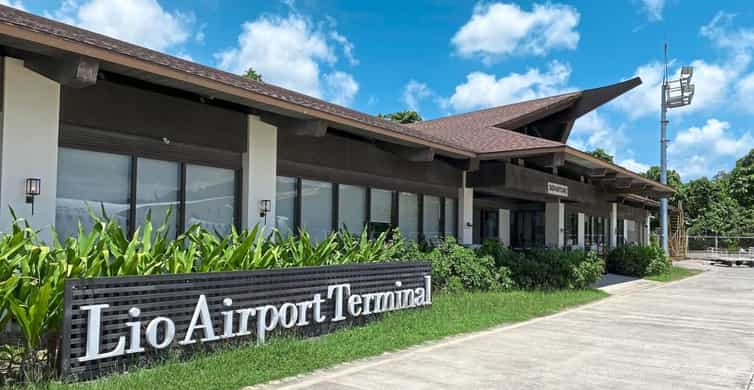
From Lio Airport the trip is a little shorter than from town. Coming from Puerto Princesa or Port Barton, vans end at El Nido's transport terminal in Corong-Corong, south of town, so plan to arrive there first and continue north by tricycle or pre-arranged transfer.
Food, shade and facilities
A string of simple beach restaurants and bars sits near the main access point, serving grilled fish, rice dishes, fresh coconuts and cold drinks; Sunmai Nacpan Beach Restaurant is one of the best-reviewed. Shade comes mostly from the palms, so bring a hat, and ask at the restaurants if you need a toilet.
Do not count on an ATM or on card payments, so bring enough cash in small bills for food, rentals and the ride back. Carry your trash back with you and leave shells and coral where they are.
Swimming at Nacpan: currents and seasons
Nacpan faces the open sea, without the shelter of Bacuit Bay's islands, so conditions change with the wind. Strong currents can run even when the waves look small, and local news has reported fatal drownings here. Swim only in calm conditions, stay close to shore, ask at your restaurant or hotel where it is safest, and do not count on lifeguards.
The sea is calmest from January to April. During the southwest monsoon, from June to October, swells and wind make the water rougher; from November, the northeast wind brings surfable waves to Duli Beach, a little farther north. For a calmer swim, Las Cabanas, south of town, is the safer choice; our Palawan beaches guide compares them.
Staying at Nacpan
Spending a night or two lets you see Nacpan at its best, early in the morning and at sunset, after the day visitors have left. Accommodation ranges from basic guesthouses and hostels to glamping tents and a few small boutique hotels; most are simple, and brownouts and slow internet are part of life here as in town.
The trade-off is distance: island-hopping boats leave from El Nido town, about 45 minutes away, so Nacpan works best at the end of a trip, after the island hopping tours. Our where to stay guide compares Nacpan with town, Corong-Corong and Lio.
Nacpan, Lio Beach or Port Barton?
Lio Beach, next to the airport, is part of a planned tourism estate, with landscaped grounds, hotels and restaurants close by, which suits families. Nacpan is wilder and much longer, with fewer services.
Port Barton is a different trip altogether: a small village in San Vicente, about 3 h 30 min to 4 h south of El Nido by van, with its own island-hopping tours and a slow pace. If you want an undeveloped beach day from El Nido, choose Nacpan; if you want a quieter base with boats on the doorstep, see our Port Barton guide.