What El Nido is like
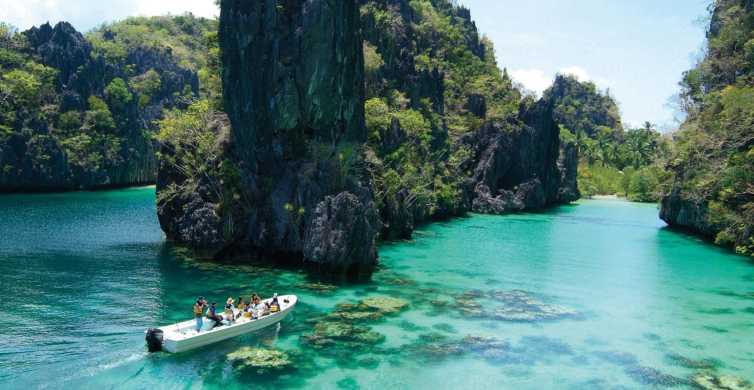
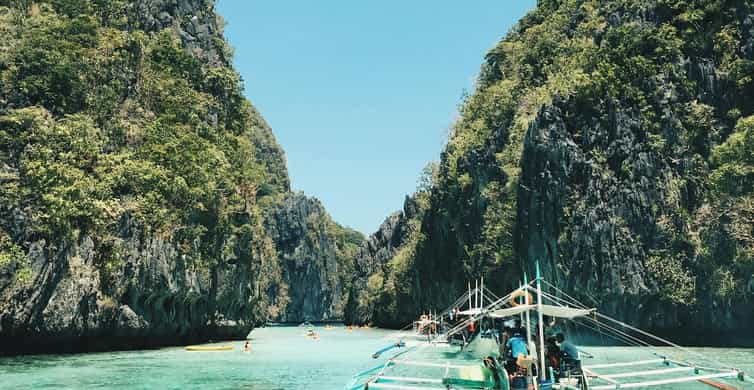
El Nido is a municipality at the northern end of mainland Palawan, and its fame comes from Bacuit Bay: dozens of limestone islands with sheer gray cliffs, small white beaches, lagoons and coral gardens, all inside the El Nido-Taytay Managed Resource Protected Area. Nearly everything worth seeing in the bay is reached by bangka, the local outrigger boat, on fixed island-hopping routes.
The town itself is small, crowded and busy. Tour offices, dive shops, guesthouses and bars line a few narrow streets behind a beach that serves as the harbor, construction never quite stops, and brownouts and slow internet still happen. Visitors who expect a quiet fishing village are often surprised; the calm starts about 15 minutes offshore, or a tricycle ride out of town.
Things to do in El Nido
Island hopping is the main event. The municipality groups the bay's sights into Tours A, B, C and D, sold at the same itinerary by every agency, and our El Nido island hopping guide explains each route, the fees and how to choose an operator. Tour A visits the Big Lagoon on Miniloc Island, one of the best-known sights in Palawan, which now runs on a slot system with visitor caps.
Beaches by land fill the days between tours. Las Cabanas, also called Marimegmeg, south of town, is the classic sunset beach and the easiest place for a calm swim. About 45 minutes north, Nacpan Beach is a long, open curve of golden sand with its twin, Calitang, at the southern end, and from November to April surfers head to Duli Beach, a little farther on. On the road north, the short hike to Nagkalit-kalit Falls makes an easy detour.
Diving and snorkeling are good inside the bay, with reef sites a short boat ride from town, and dive shops run trips and courses. In the evening, the town beach and the sunset bars of Corong-Corong are where everyone ends up; our El Nido restaurants guide covers where to eat and drink.
Town, Corong-Corong, Las Cabanas or Nacpan
El Nido town is the practical base: the tour boats leave from its beach, and the restaurants, ATMs and pharmacies are within walking distance. Expect noise late into the night in peak season and a beach lined with boats rather than loungers.
Corong-Corong, about 2 km (1.2 miles) south, is quieter and faces west over the bay for the sunset; the transport terminal where vans and buses arrive is here too. Las Cabanas and Marimegmeg, a few kilometers farther south, have beachfront resorts and bars. North of town, Caalan looks across to Cadlao Island, and Lio, a planned tourism estate next to the airport, has a long beach, hotels and restaurants. Nacpan suits travelers who want a beach and little else, at the price of a long commute to the boats.
Our where to stay guide compares these areas, along with the private island resorts inside Bacuit Bay, and suggests the best fit for couples, families and budget travelers.
How to get to El Nido
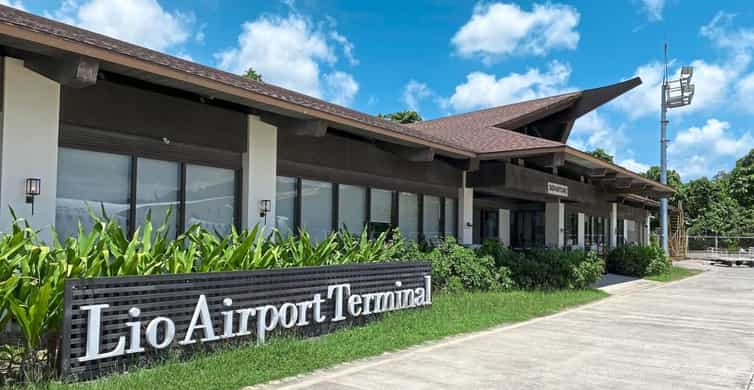
The fastest way in is a flight to El Nido's Lio Airport (ENI), about 4 km north of town. Its small turboprops no longer use Manila's NAIA: since March 29, 2026 they leave from Clark, north of Manila, and from Cebu, with direct hops from Coron, Boracay and Bohol. Since July 1, 2026 the former AirSWIFT flights are operated by Cebu Pacific's regional arm, Cebgo. Our El Nido airport guide covers flights and transfers.
The cheaper route is a jet flight to Puerto Princesa followed by a shared van of about 5-6 hours, with a meal stop on the way. From Coron, fast ferries take roughly 3 h 30 min to 5 h (see our El Nido to Coron ferry guide), and from Port Barton vans take about 3 h 30 min to 4 h.
How many days you need in El Nido
Three nights is the minimum: one day to arrive and two boat days, typically Tours A and C. Four or five days are better, leaving room for a third tour or a private boat, a beach day at Nacpan or Las Cabanas, and a spare day in case rough seas cancel a tour. Divers and anyone who wants all four routes at a slower pace can easily spend a week.
Most first trips pair El Nido with Coron, linked by ferry or by a multi-day boat expedition through the islands of Linapacan. Our Palawan itineraries show how to fit the two together and when to add Puerto Princesa.
Fees, cash, seasons and who El Nido suits
Every visitor pays El Nido's Eco-Tourism Development Fee, reported by operators as ₱400 since 2024, up from ₱200 (about $7.50) according to operators, in cash; the ticket is valid for 10 days, so keep it. The Big and Small Lagoons add a ₱200 (about $3) environmental fee each. Bring enough pesos for the whole stay: the town's ATMs often run out on weekends and holidays, and many small places do not take cards. Our safety, fees and entry requirements guide covers the rest.
The dry months from January to April bring the calmest seas, with February and March averaging only about 30-35 mm of rain. The southwest monsoon from June to October brings 290-370 mm a month and swells that cancel tours, especially Tour C in the open water; see Palawan weather for the seasons. El Nido suits travelers who love boat days, snorkeling and dramatic scenery; it suits less well anyone looking for quiet nights in town or a resort-style beach on the doorstep.
Frequently asked questions
What is El Nido best known for?
The limestone islands, lagoons and beaches of Bacuit Bay, visited on day-long island-hopping tours. The Big Lagoon on Miniloc Island is its best-known sight.
How many days do you need in El Nido?
At least three nights for two island-hopping tours; four or five days let you add a beach day at Nacpan or Las Cabanas and keep a spare day for bad weather.
Can you fly directly to El Nido from Manila?
Not from NAIA. Since March 29, 2026 the turboprop flights to El Nido leave from Clark, north of Manila, and from Cebu; from NAIA you can fly to Puerto Princesa and take a 5-6 hour van.
Is El Nido or Coron better?
El Nido has more beaches, the famous lagoons and a busier town; Coron is better for lakes, wreck diving and a smaller, working-port feel. Many first trips include both, linked by ferry.
Do I need cash in El Nido?
Yes. The visitor fee, lagoon fees, tricycles and most small restaurants are cash only, and the ATMs in town often run out, so bring pesos from Puerto Princesa or Manila.