Coron town and Coron Island are not the same place
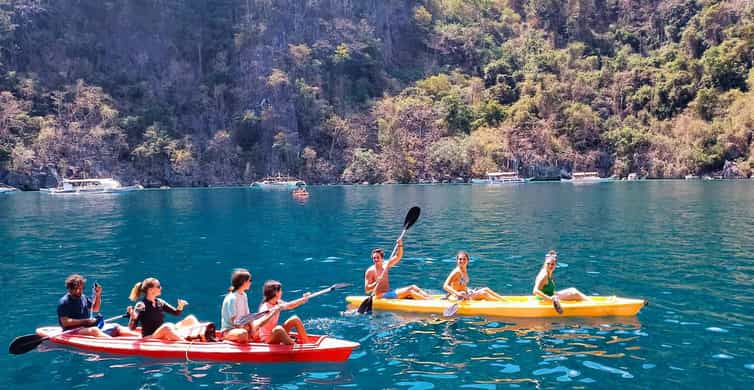
The name Coron covers three things. The municipality of Coron spreads over several islands of the Calamian group, between Mindoro and mainland Palawan. Coron town, the Poblacion, sits on the south coast of Busuanga Island, the largest of the group, and is where almost every visitor sleeps, eats and boards a boat. Coron Island is the steep limestone island across the channel, a short boat ride from town, and it is where Kayangan Lake, Twin Lagoon and Barracuda Lake are.
Coron Island is the ancestral domain of the Calamian Tagbanua, who received a Certificate of Ancestral Domain Title in 2001 covering the island, neighboring Delian Island and the surrounding waters, about 22,284 hectares (55,000 acres) in all. Of its twelve lakes, only Kayangan and Barracuda are open to outsiders, by day only, and visitors do not stay overnight, so you see the island on island-hopping tours from town.
The town itself is practical rather than pretty: a harbor lined with dive shops, tour desks, guesthouses and restaurants, a public market and tricycles as the main transport. It has no beach worth the name, which surprises some first-time visitors; the white sand is all on the islands.
How to get to Coron
Most travelers fly. Francisco B. Reyes Airport (USU), usually listed as Busuanga or Coron, is on Busuanga Island north of town, and Cebu Pacific and Philippine Airlines connect it with Manila in about an hour. Shared vans meet arrivals and take about 40-45 minutes to reach town, for a few hundred pesos per seat. Travelers report paying a municipal environmental fee of around ₱200 (about $3.50) on leaving the airport; keep the receipt, as tour operators may ask for it.
By sea, overnight car ferries link Manila with Coron in roughly 13 hours, and Atienza also lists a shorter crossing from Batangas; sailings run once or a few times a week and change often, so check the operator's current schedule. From El Nido, fast ferries run by Montenegro Lines and several smaller companies take roughly 3 h 30 min to 5 h. The El Nido to Coron ferry guide compares them, and multi-day boat expeditions camp on islands along the way.
Busuanga has no road link to the rest of Palawan, so there is no van from Puerto Princesa; see getting around Palawan.
Things to do in Coron
Island hopping is the main reason to come. Day tours from the town pier visit Kayangan Lake, Twin Lagoon and Barracuda Lake on Coron Island, the reefs of Siete Pecados and beaches such as CYC, Banol and Malcapuya; our Coron tours guide explains the usual routes. Divers come for the Japanese supply ships sunk by US Navy aircraft on September 24, 1944, and several shallow wrecks can be seen with a mask and snorkel, as our Coron wreck diving and snorkeling guide explains.
Mount Tapyas is the hill behind town. A long concrete stairway, usually counted at just over 700 steps, climbs to a viewpoint about 690 ft (210 m) above the bay, and the climb takes 20-30 minutes. Most people go up in the late afternoon for sunset over the harbor and the islands; bring water and a flashlight for the way down. Entry is free.
Maquinit Hot Spring, 20-30 minutes by tricycle east of town in Barangay Tagumpay, is a saltwater spring at the edge of the mangroves, with pools usually around 100-104 °F (38-40 °C). Entry is around ₱200 (about $3.50) and it stays open into the evening, so a common plan is Mount Tapyas for sunset and a soak afterward. Agree the round-trip tricycle fare, including waiting time, in advance.
With more time, a long day trip reaches Calauit Safari Park in the far north of Busuanga, where giraffes and zebras brought from Kenya in 1977 still live alongside the endemic Calamian deer. A slower outing crosses to Culion, the island that was once the country's leper colony, with a museum on its history.
Where to stay in Coron
Stay in Coron town unless you have booked an island resort. The town has everything from hostels to mid-range hotels above the harbor, and tours and dive boats leave from its piers. Barangay Tagumpay, east of the center on the way to Maquinit, is quieter.
Private-island resorts sit on small islands off Busuanga. Two Seasons Coron Island Resort, for example, is about 1 h 30 min from town by van and boat according to its listings. They suit a beach stay but make day tours from town slower. The where to stay in Palawan guide compares the options.
How many days in Coron, and when to go
Plan three full days at minimum: one Coron Island tour with Kayangan and Twin Lagoon, one reefs-and-wrecks or beach tour, and an afternoon on Mount Tapyas and at the hot spring. Four or five days leave a spare day for weather, which matters because tours do not run when the coast guard stops small boats, and give divers time for two or three days on the wrecks. See Palawan itineraries for combinations with El Nido.
January to May is peak season, with calmer seas and the least rain. An Asian Development Bank study counts December and June to August as shoulder months and September to November as the quietest. The southwest monsoon (habagat) from June to October brings the most rain, about 290-370 mm (11-15 in) a month in nearby El Nido, and the northeast winds of the amihan can make the open crossing from El Nido choppy in December to February. The Palawan weather guide explains each season.
Who Coron suits
Coron suits divers, snorkelers and anyone who prefers lakes, lagoons and cliffs to long beach days, and it works well as a second stop after El Nido. It suits less well if you want to walk out of your hotel onto a beach, or if you dislike boat days, since nearly every sight needs a banca. Compared with El Nido, the town is smaller and more of a working port, the lagoons are fewer but more distinctive, and wreck diving is Coron's own specialty.